Excerpt
Excerpt
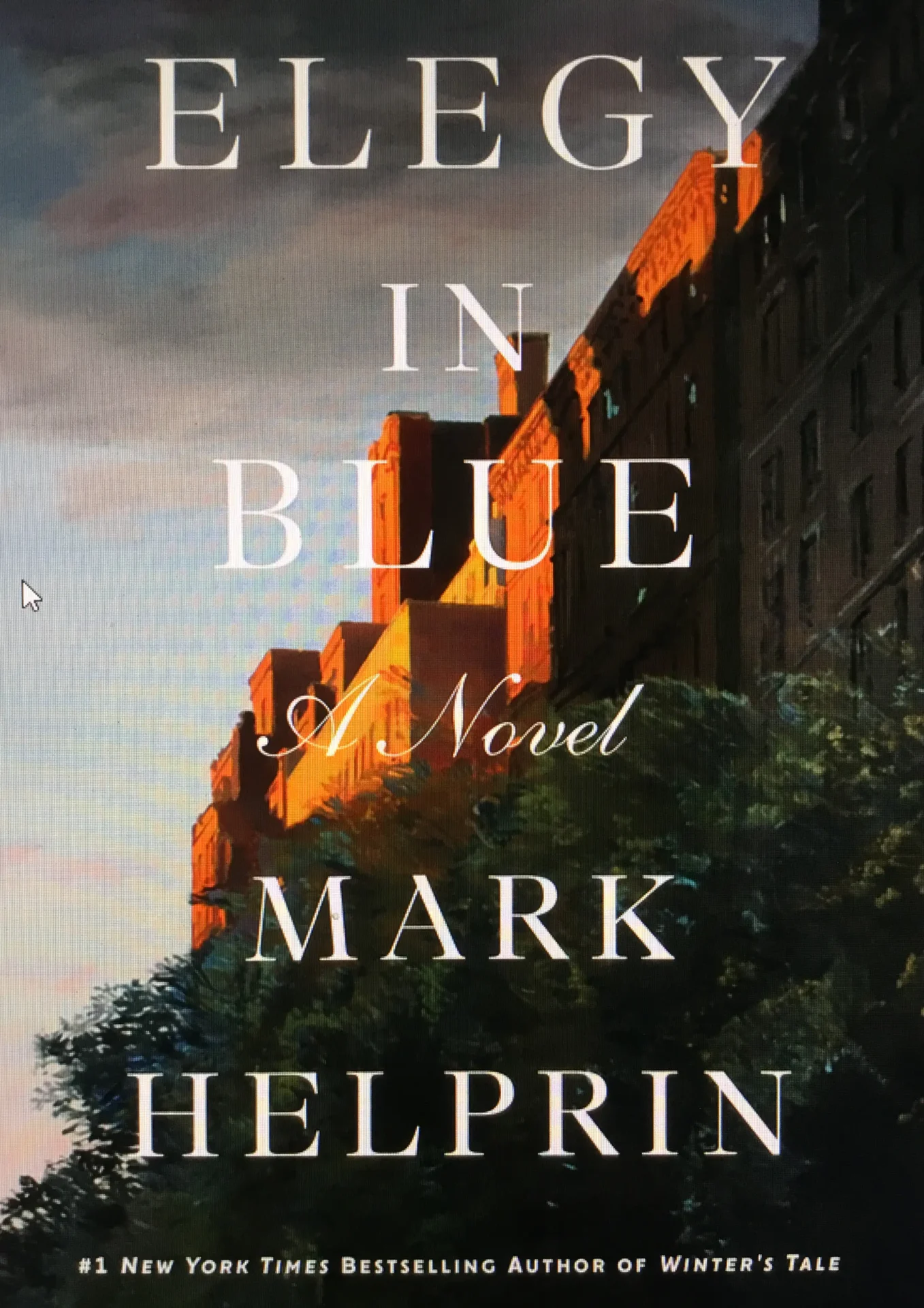
The Sky Above Brooklyn
They are coming to kill me. Not the people in the first half of this story (they tried and failed), but those of the second half – an entirely different set, who really surprised me. This is, however, of little moment, because I no longer live in the power of the world. I escaped that: as it is said, gradually at first, then suddenly.
You might think my imminent extinction would occasion fear, sturm und drang, or at least some free-floating anxiety. Boswell, author of the greatest biography in the English language and affectionately known for having been thrown out of a theater for making cow noises, reported on Samuel Johnson’s fear of death. As Johnson himself supposedly believed, it is in the apprehension of annihilation that horror exists. With a mind like Johnson’s, bathed in the richness of existence, such terror is understandable, but what good did it do? None, and he knew it. And I know it, too. So I concern myself with other things that I know.
For example, that New York, including – and especially for me – Brooklyn, is a vast work of tragedy and comedy intertwined. You can’t escape either, and they are so deeply involved, the one with the other, that sometimes you can’t tell the difference. Why this is I don’t pretend to know. Perhaps for relief, balance, symmetry? One thing is sure, the more gargantuan and complex the city has become, the more its great weight and complexity have compressed its tragedies and comedies into a single fabric. Although during one’s life the balance between the two must be maintained, like Hamlet, you may find it hard to make up your mind about which one best applies. But in the end, you fully understand that the rest is silence, the pain of loss becomes something of transcendent beauty.
The story I’m about to tell, of love in a time of violence, is complicated with many diversions. As it soon will end in my death, I have nothing to lose and can say what I wish. Memories now upwell overwhelmingly, and I see clearly that the most important thing of all is loyalty to those you love, even when they are gone.
I’m writing this down for Clare. When she was alive I was never able, as I wanted, to tell her how much I loved her. Of course, I said so now and then, but the words could not hold the weight of that love, and always fell short. So now I write, and when you write you have the secret, unfounded hope that somehow the magic of the written word can leap beyond the constraints of mortality, and that with divine leave even the dead can read what is in your heart.
Lincoln believed that “writing – the art of communicating thoughts to the mind, through the eye – is the great invention of the world . . . in enabling us to converse with the dead, the absent, the unborn, at all distances of time and space.” Can the forgotten work and love of countless millions – of bakers and miners and soldiers and dress makers – adequately be conveyed in a single passage or a single phrase? Yes, because the power of a phrase can be gathered from the work of hands, the suffering of souls, the rhythms of days and nights, and even the cool rising of an off-white, pearl-gleaming moon. There is no worth of a phrase without such antecedents, no lightning in it without the power that rolls through all things. For, with that, the phrase or form of any art, though a tiny atom, when split can let loose worlds as bright as a thousand suns.
Brooklyn is my last stop, the king of the five boroughs, with a softness and mystery Manhattan can only envy, Queens cannot conceive, the Bronx cannot imagine, and Staten Island …. Well, Staten Island should be a part of New Jersey. Brooklyn is embraced by the ocean, the harbor, the East River, and land stretching a hundred miles into the Atlantic. It is not infinite, but more than the rest of the city it contains infinitudes. And these are to be found mainly straight up, above, aloft, and all in blue. The blue in the sky above Brooklyn is a rhapsody. As in the Gershwin tune – some tune – there is no rhapsody without elegy, and there is no elegy without rhapsody. Though they tend to alternate, they do sometimes coincide, just as when a broken heart still beats.
Rhapsody and elegy, tragedy and comedy. New York is like that and always has been. There’s something about this city of islands and rivers that braids together two such opposites until they are inextricable, and then you love them both and – forgive me or not if I cannot refrain from speaking of broken hearts – they break your heart. But in breaking it they resurrect it as well, and show you what you love enough to die for.
Here amid the three islands, three rivers, and innumerable inlets, I was schooled in the shades of blue. The blues of the Atlantic, the harbor, and the sky changing minute by minute, hour by hour, day by day, year by year. Give them their due, and they will tell the story of those you have lost, and unite you with them once again. I see the decades passing in blue, sounding like music, serving as signs, masterfully overriding despair as if with the blasts of ships’ whistles or distant thunder transformed into pulses of color. And I saw it early on, a long time ago, from a rooftop on Willow Place, looking straight up into a pellucid sky of cobalt blue.
Cobalt Blue, the French chemist Louis-Jacques Thénaud’s gift to the painter’s art, was unknown until 1802. Prior to that, cobalt in glass helped dazzle the eyes in the Cathedral of Chartres. But long before Chartres, and now, when the temperature, humidity, angle of the sun, and clarity of the air are ideal, the sky will turn this color. You have to look at it straight up, as the color is less intense if perceived indirectly and through a greater mass of atmosphere in the denser air out to the horizon. For no matter how pure and how invisible it might be, air will mar the perfection of light, just as there cannot be a soul without sin, though that’s not the end of it, as life is supple, and something there is which sometimes is forgiving of sin.
I don’t know if other people have in their lives a benchmark or a set point – like the meter stick in Paris once was, the Atomic Clock in Boulder (perhaps that, too, has been superseded), or the milliarium aureum, the golden milestone in Rome (how did they keep people from stealing it?) – a place where all roads begin, or, depending upon your point of departure, end. But there is in mine a moment so much the highest I would ever reach that in the midst of it I sorrowed that it would not last. And all the roads I hope to travel lead back to it.
A long time ago, early in fall on Willow Place in Brooklyn Heights . . . . It was one of those perfect days that come to New York, should New York be lucky, only a few times a year. I had just carried four heavy terra-cotta planters and four fifty-pound bags of soil up four flights of stairs to a roof deck I had built that summer. The planters had arrived only in October, and we thought that if we transplanted our pots of geraniums into them and covered them on cold nights they would last even into December.
Each time I came to the second floor, Clare picked up our infant son and carried him to greet me. We named him Charles and called him Charlie, which was perfect for a baby who was mischievous and funny and, before he could walk, had he been able to walk would have been full of bounding energy. What with the sacks of planting soil, I made many trips, and it became the kind of repetitive game that babies love: and, seeing their pleasure, parents, too. Each time, he burst into smiles, his eyes sparkled, and he sometimes clapped together his little hands. We responded with words and kisses. We should have had two children, or three, or more. It would have been a nuthouse, especially in their adolescence, but I think we would have loved it. We were not unfruitful, but we did not multiply, and, in the end, I don’t know why.
Even had Clare not been painfully beautiful, had she been plain or less, her beauty then would have been overwhelming, much like the bride’s wedding-day magic, which cannot be explained. On my last run, I said – I remember it exactly – “I’ll be with you soon,” and then I went back up, arranged the planters, filled them with soil and geraniums, and rested on a garden bench with a view across the scarlet carpet I had just laid down. Black rooftops and forests of brick stretched to the sea, past the woven truss-work of bridges through which seemed to thrust the spires of Brooklyn’s empty churches.
I was more than content, in that I had so much to love faithfully and protect well. That my wife and my almost-one-year-old son were close to me and down only a few easy flights of stairs was exciting and elevating. Compared to them, every image of the Madonna and Child seemed wan, for Charlie had the color of roses, and Clare, in the full flush of life and strength, had the energy that comes from thinking that such happiness will never end – not that she was naive, but rather that she was daring. Weightless, untrammelled, and alive, we were on a rocket ride in the blue.
I knew then that it would end – how could I not have? – though I didn’t feel it, or know how or when, or if with the violence I had known, as it is said in the King James, all the days of my life. Violence never absent in memory enough to overcome tenacious recollection, and always and unfortunately to color all things. In that moment however, in the clear air and perfect light not only did I fear no evil, evil seemed to have withdrawn from the world entirely.
As if to set a seal upon this, in the relative quiet – there was always the hum of Brooklyn roads, the muffled roar of the BQE, and the sound of air whistling through the steel weave of the bridges – I heard a call sufficiently faint as to make me suspect that I had imagined it. But then the wind shifted and ceased, and the sound returned. It was so distant that it could not have come as purely as it did across the plain of roofs with all their obstructions and impediments. As faint as it was, I realize only now that the sound was something – no doubt imprinted into humanity a hundred-thousand years ago – that the heart would recognize even had it not been heard before.
Vertiginously high above, so high that when I bent back to look I nearly lost my balance, were thousands of geese beating their wings as steadily as if to a metronome. There were so many that they darkened the sky. Their calls had no discernable pattern, and they were so far above that the only reason they could be heard – faintly, beautifully, mournfully was that the sound carried straight down with no lateral interference. The City of New York is below their flyway when they migrate south. Long before recorded time their forbears had passed over Brooklyn when it was woodland and marsh and no man or woman had seen the waves that broke upon its untouched beaches. They had watched as the fat, roly-poly, Dutch ships tiptoed up the Hudson, and they had looked down as the city grew, becoming so immense as it sang the song of itself that it no longer took notice of them.
They were headed straight for the Atlantic, and would overfly many miles of ocean before crossing back across the beaches at great speed, with the land below once again. For a quarter of an hour I watched them as they passed, oblivious of the city beneath them. And although they were so high it seems impossible that the sound would carry, I could hear the beat of ten-thousand wings.
After release from the beauty of this sight and sound the first thing I thought was that I may have been perhaps the only one of millions – confined indoors by windows and walls, or outside looking merely ahead, not up, or stuffed uncomfortably into yellow taxis or shuttling through underground tunnels of steel and concrete – to see geese numerous enough to carpet the sky, and to hear the beating of their wings and the sadness of their calls, over Manhattan, over Brooklyn, over the harbor, and over the bay.
How lucky I was not to have been busy, to have been in the open air, to have been so full of love for my wife and child – both so much better than I could ever be – who were downstairs, waiting for me. And I knew that when all this was gone, all our efforts forgotten, when the city had vanished and the marshes and tides after patiently waiting had returned to claim their sovereignty, that every fall the flights of geese would sail across the sky. Midnight blue, cobalt blue. The otherworldly color was such that it set its seal upon all things, as if, in completely filling the eyes, it opened the way to an infinity of blue where time had ceased and love was all.